

Dave Jeffery's
Flash-free Files 1
Created We 1-Mar-17
Updated We 2-Sep-26
Contents
- Idents - the BBC liked to build moving models to represent the channel or service you were watching. Now with the BBC 1 mirrored-globe ident as seen in 1980 and the special BBC 1 Olympics ident from 1984.
- Clocks - mechanical and electronic timepieces that used to be seen before the news or at closedown.
- Schools & Colleges - symbols, clocks and countdowns shown during BBC schools programming.
- The Open University - the mechanical and electronically generated Open University clocks, various captions plus the animated symbol with its brass fanfare.
- Test Cards - the Pulse & Bar and Multi-burst test patterns with Test Card G, as used by the BBC.
Idents
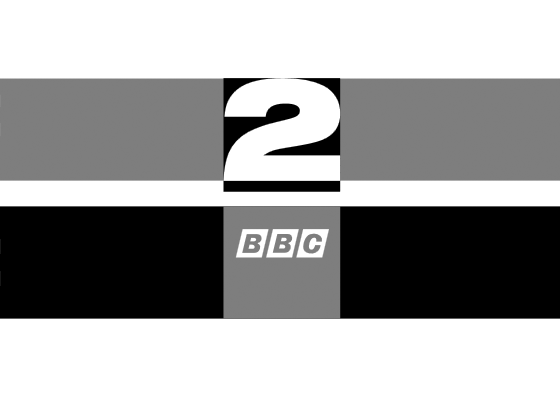
BBC 2 came along in April 1964, broadcasting in higher definition (625 lines instead of 405) and on UHF. It was a new system that BBC 1 and ITV would also later adopt, but for now viewers had to fork out for a new dual-standard TV set to watch all three channels.
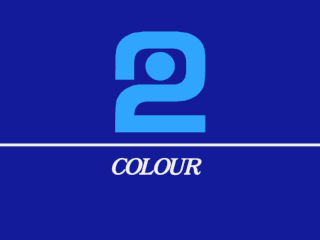
BBC 2 - Colour II
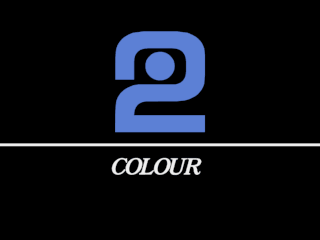
BBC 2 - Colour II - Black
In 1972, BBC 1 had a spinning globe ident, with a horizontal dividing line. The station logo and the word "COLOUR" appeared in Roman italics underneath. Everything was light blue on a black background. For BBC 2, a similar mechanical model was made, based on the channel's first spinning "2" ident. The model could be made to rotate as many times as required during announcements. And BBC 2 went one better than the main network - its ident could be displayed with three colours instead of two.
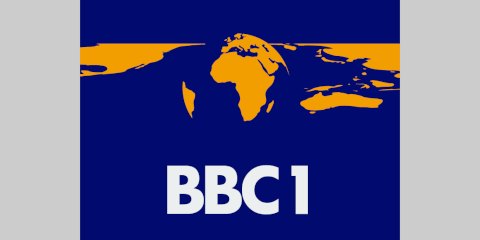
BBC 1 NEW!
After Christmas 1974, the word "COLOUR" and the horizontal divider were dropped from the idents of both BBC networks. On BBC 1 the globe was updated with new colours, with bold lettering replacing the old corporate style.
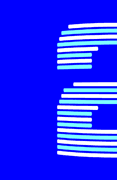
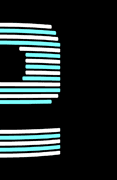
Over on BBC 2, the rotating cube was replaced with an upright cylinder sliced horizontally. The magic happened when the slices with white stripes on rotated one way and the slices with the light blue stripes rotated the other, splitting up the "2" and reforming it again. The colours were taken from the previous ident and as before a variant with a black background was sometimes used.
BBC 2 - Electronically Generated
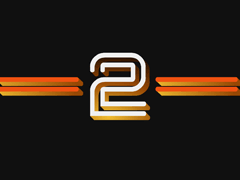
In June 1979 a new BBC 2 ident took to the air. Designed by Oliver Elmes, this was played out from a solid-state device. The animation was created by the BBC Computer Graphic Workshop. The first sequence showed the symbol being drawn onto the screen from left to right. The second showed it disappearing in a similar manner. Both sequences lasted four seconds and the first one shown after a closedown would initially have been accompanied by a jingle.
BBC 1 Olympics NEW!
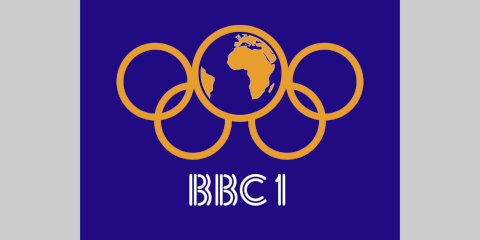
Stripy lettering finally made its way on to the BBC 1 ident in 1981 when the globe changed to a lime green colour. In 1984, thanks to an industrial dispute at ITV, the BBC had exclusive coverage of the Olympics. Over this period, BBC 1's spinning globe would go back to being yellow and appeared inside an adapted Olympic rings symbol.
Clocks

BBC 2's first clock had Roman numerals on the dial. The Flash version of this was shown at the National Film Theatre (now BFI Southbank) in London when it held a Play School event, with former presenters, to celebrate 40 years of BBC 2. There was also a version of this clock with a grey background.
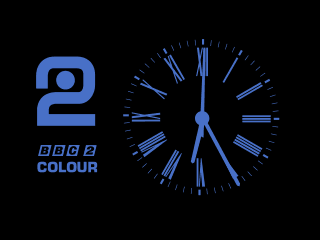
When BBC 2 started broadcasting some of its programmes in colour, in July 1967, they continued to use the black-and-white clock above, to which colour was added using a 'synthesiser'. The official launch of colour came in December and with it came a new symbol - a 2 with a dot in it. The clock was updated accordingly.
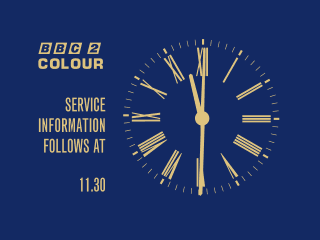
BBC 2 Service Information Clock
The clock was also used to introduce Service Information, a programme not listed in the schedules, which gave out transmitter information to the television trade. A different colour scheme was used from the main clock.
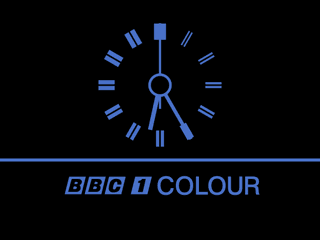
This was the BBC 1 clock used from the launch of the channel's new colour service in November 1969. Reportedly the work of senior designer Alan Jeapes, it featured hour markers of increasing thickness and, like the BBC 2 clock, was shot using a black-and-white camera before being colourised. The clock face design would remain in use for over a decade.
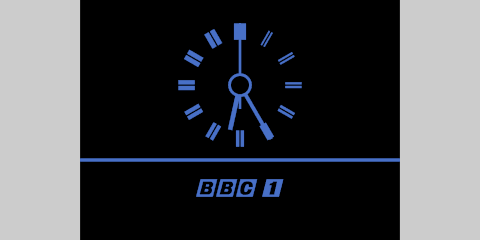
BBC 1 Clock - Black & White NEW! Su 2-Aug-26
In the early days of colour, many programmes were still shown in black and white, including all schools programming. A second BBC 1 clock without the "COLOUR" label was therefore required. The clock was broadcast in colour, but would appear in black and white on a monochrome set.
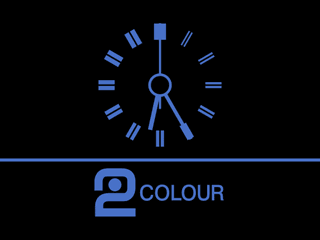
The new BBC 1 clock design was also adopted by BBC 2. But here, as with the station's ident, the BBC logo was absent.
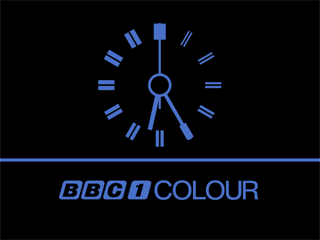
By 1971, the BBC 1 clock had been modified with the new BBC corporate logo, which now had rounded corners.

By 1972, the BBC network clocks had been modified again. The "COLOUR" label changed from a sans-serif font to a Roman font and was now in italics. "BBC COLOUR" in this style would now also appear at the end of the credits for most BBC productions.
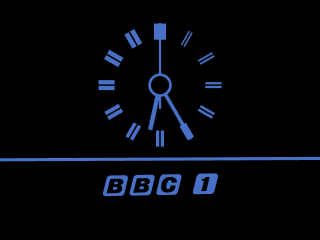
BBC 1 Clock - Black & White II
The clock used for black-and-white programmes was also updated with the modified BBC logo. This could be seen, for example, on 7th February 1974 to introduce Blue Peter.
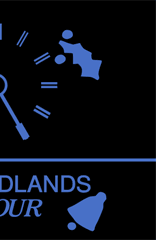
BBC Midlands Clock
BBC Midlands Clock - Christmas
A photograph of the BBC Midlands clock shown over Christmas in 1973 was published in an article in the May 1978 edition of Television magazine. It's re-created here along with the standard version of the clock.
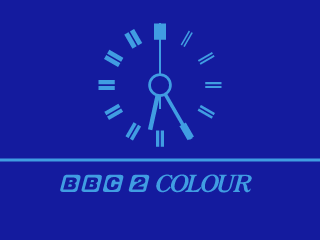
The BBC 2 clock from 1972, with the corporate identity on display again. There was now a blue background to help distinguish the clock from that seen on BBC 1.
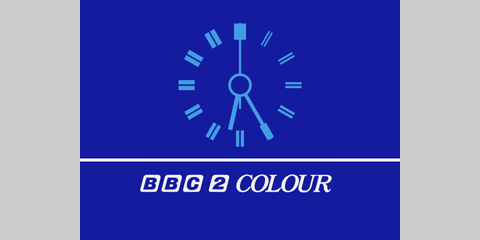
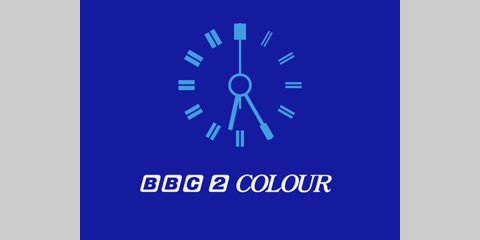
BBC 2 Clock - Three Colours
BBC 2 Clock - No Line
A third colour was added to the BBC 2 clock to match the station's ident - showing the BBC logo, lettering and line in white. At some point, the horizontal dividing line was dropped from the clock and, at the end of 1974, it was removed from the idents of both channels, too.
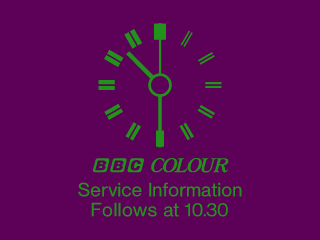
The clock design seen in the 1970s on BBC 1 and BBC 2 was also used to introduce Service Information. As well as the green-on-purple variant seen here, many other ghastly colour schemes were experimented with such as purple on green, green on white, pink on light blue, light blue on pink, yellow on brown, brown on yellow and green on red.
After Christmas 1974, a new design for the BBC 1 globe appeared. Three colours were now used and the channel name was now larger and used the Futura Bold typeface. The new lettering and colour scheme were also applied to the clock. Then, at some point in 1975, the second hand was replaced with a shorter one, so that it no longer extended through the other side of the ring in the middle.
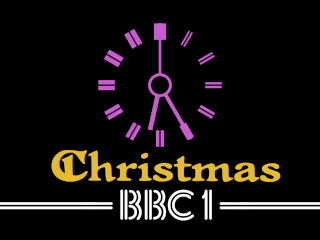
Although BBC 1 appeared in Futura Bold underneath the globe, clock and schools symbols, the channel name appeared in a new twin-striped font elsewhere, such as programme slides. In 1975 this new style appeared on the Christmas ident for the first time. Here you can see its next appearance on the Christmas clock one year later.

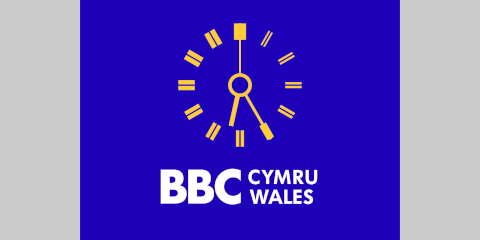
BBC Cymru Wales Clock
BBC Cymru Wales Clock II
NEW! Su 2-Aug-26
Northern Ireland, Scotland and Wales each had their own globes and clocks based on the three-colour network models. In Wales, the clock followed the same evolution as its network counterpart, starting with a full-length second hand through the middle, which was later shortened.
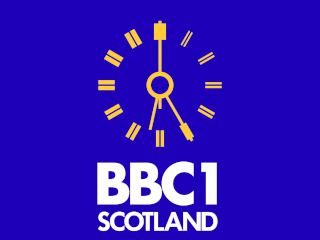
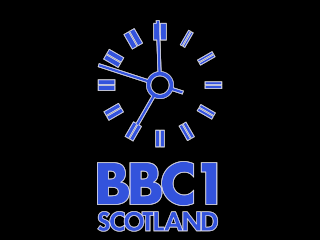
BBC 1 Scotland Clock
BBC 1 Scotland Clock - Black
This was the BBC 1 clock seen in Scotland. In December 1980, BBC Radio Scotland's Good Morning Scotland was simulcast on TV in an experiment called Radiovision. The clock leading into this used a different, blue-on-black, colour scheme.
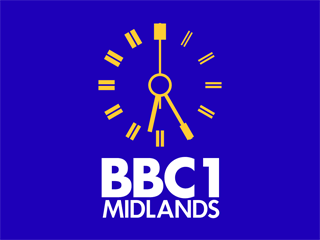
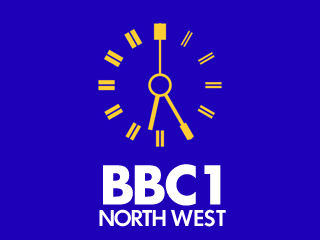
BBC 1 Midlands Clock
BBC 1 North West Clock
The BBC English regions also had their own on-screen identities. The BBC 1 Midlands clock kept the longer second hand from the original clock face, but the BBC 1 North West clock followed the network's update to a shorter second hand.
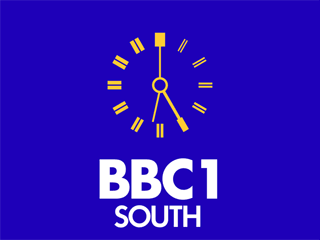
The BBC 1 South clock looks the same as the network clock at first glance, but on closer inspection, the clock face is slightly smaller, as is the ring in the middle and the hour hand appears slimmer too.
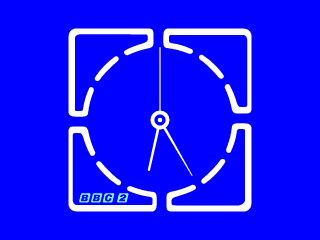
When BBC 2's new stripy cylinder ident launched after Christmas 1974, a new square clock design came with it. The ident and clock were about the same height and width, allowing for a pleasing transition between the two images.
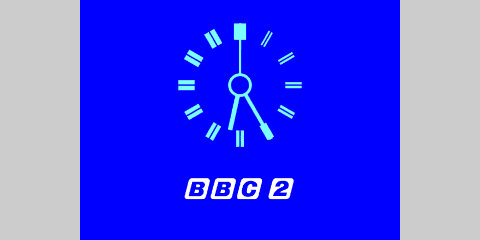
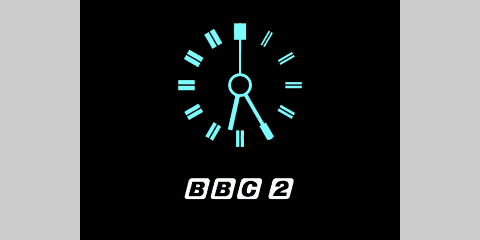
BBC 2 Clock
BBC 2 Clock - Black
In early 1975, BBC 2's new clock was abandoned in favour of the old design, shared with BBC 1. There was also a lesser-spotted black version of this clock.
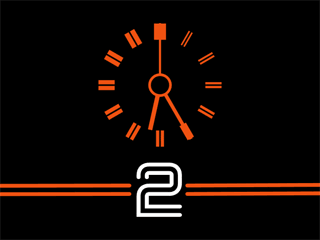
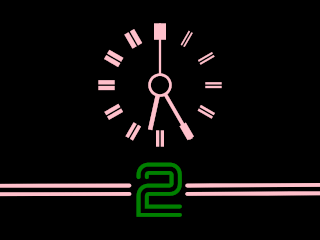
BBC 2 Clock - Twin Stripes
BBC 2 Clock - Twin Stripes - Christmas
In 1979 a new BBC 2 ident took to the air, the first to be played out from a solid-state device. The new clock, though, remained a mechanical model with a camera pointing at it, for now. The colours were tweaked to produce a festive version for Christmas that year.

BBC 2 Clock - Electronically Generated
Around autumn 1980, BBC 2's mechanical clock was replaced by a box of electronics, designed in house by Richard Russell. This allowed the network symbol underneath the clock to be properly shaded. Similar hardware was rolled out to BBC 1 the following year.
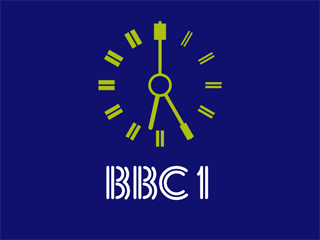
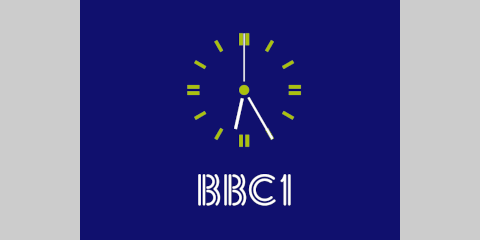
It wasn't until September 1981 that BBC 1 finally adopted the twin-stripe design first used on its programme slides and Christmas idents in the previous decade. The stripy lettering also brought back some consistency across the BBC's two channels. A new globe meant a change from yellow to lime green. And the clock also got some new hands. This mechanical clock would be replaced within a couple of months...
BBC 1 Clock - Electronically
Generated
Updated Mo 1-Dec-25
BBC 1 Clock - Electronically
Generated - Christmas
NEW! Mo 1-Dec-25
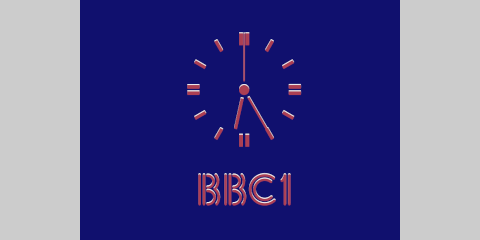
BBC 1's first electronically generated clock arrived in late 1981. Over Christmas 1984, it was presented in purple with a white shadow, perhaps to suggest it had been left out in the snow. Viewers would need to stay up until closedown to make sure they saw it and each night the shadow would be in a slightly different position.
BBC 1 Scotland Clock - Twin Stripes
BBC Scotland Clock - Twin Stripes
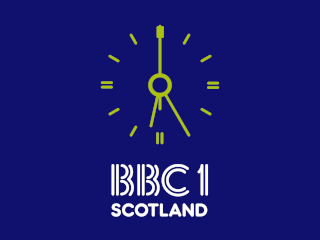
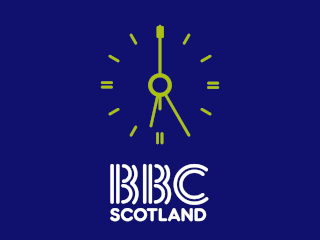
The nations' versions of the stripy clock remained mechanical. Viewers in Scotland were treated to a new dial design. Then in 1983, BBC 1 Scotland shortened its name to BBC Scotland.
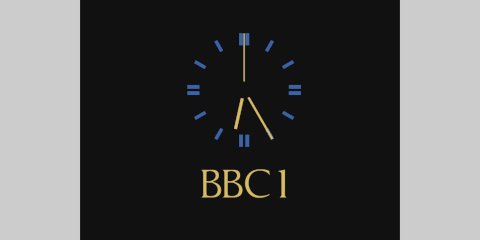
BBC 1 Clock - Electronically Generated II Updated Su 2-Aug-26
In February 1985, BBC 1's ident caught up with the clocks, moving to electronic generation. The new golden globe was known inside the BBC as COW (Computer-Originated World) or OWL (Open World Logo). The clock design was updated to match.
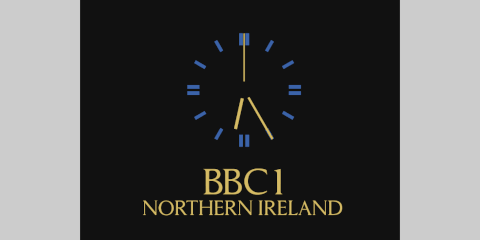
BBC 1 N. Ireland Clock - Electronically
Generated
NEW! Su 2-Aug-26
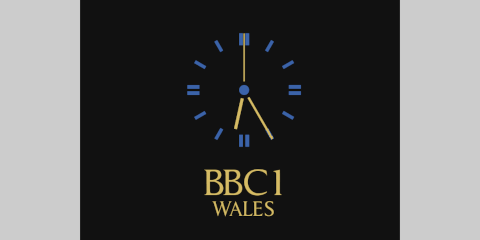
BBC 1 Wales Clock - Electronically
Generated
NEW! Su 2-Aug-26
The new electronic clock design was also rolled out to the nations. In Wales the clock had a blue centre dot, absent from both the network clock and the Northern Ireland version.
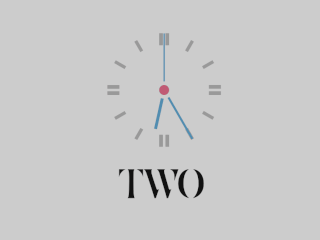
BBC 2 Wales Clock - Electronically Generated
BBC 2 moved away from its twin-stripe symbol at Easter 1986. Its new ident spelled out TWO in a 3-D stencil typeface casting a shadow onto a white background. The clock had a similar look, but the nations' clocks were simpler, flat designs, with no shadows. Each nation chose its own colour scheme. This is how the clock looked in Wales.
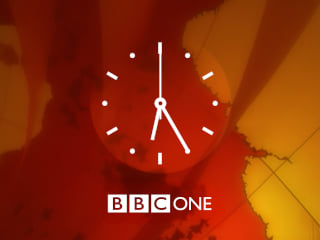
BBC 1 Clock - Electronically Generated III NEW! Sa 4-Oct-25
In October 1997, BBC 1 became BBC One, with idents showing a hot air balloon flying across different parts of the UK. The rebrand also introduced a new corporate logo, which you can see here on the revamped clock.
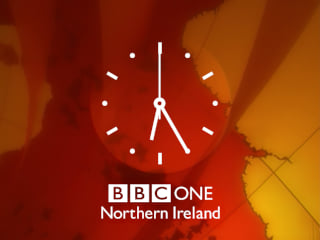
BBC 1 N. Ireland Clock - Electronically Generated NEW! Sa 4-Oct-25
The nations and English regions also got versions of the new clock. This is how it appeared in Northern Ireland.
Thanks to Nathan Dane for the background image.
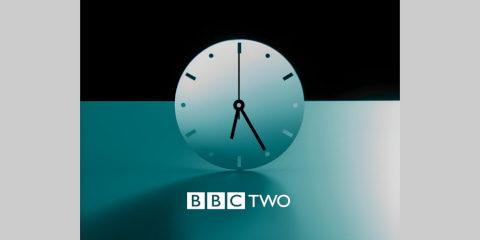
BBC 2 Clock - Electronically Generated II NEW! Su 2-Aug-26
BBC 2 became BBC Two at the same time as the balloon was introduced on the main channel. The clock and idents remained the same except for updates to the corporate branding.
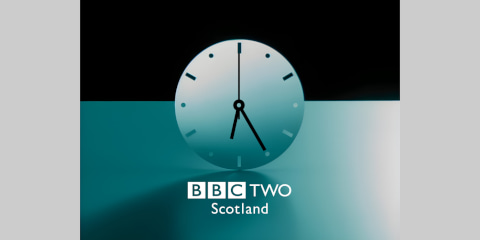
BBC 2 Scotland Clock - Electronically Generated NEW! Su 2-Aug-26
The clocks were also updated for the nations. This is how it looked in Scotland.
Schools & Colleges
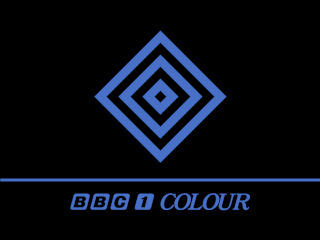
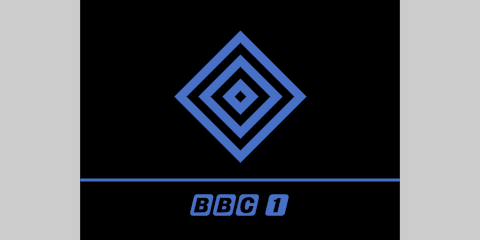
BBC 1 Schools Diamond
BBC 1 Schools Diamond - Black & White
NEW! Su 2-Aug-26
In October 1973, to mark the arrival of colour for schools programmes, BBC 1 unveiled a new animated diamond symbol shown before each one. As with the globe and clock, this was a mechanical model with a caption underneath that read "BBC 1 COLOUR", modified to simply "BBC 1" for older programmes made in black and white.
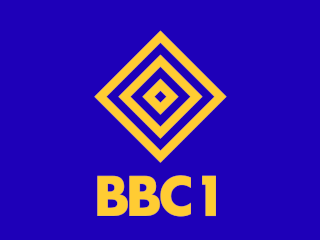
In 1975 the diamond turned yellow to match the BBC 1 globe and clock, but the accompanying music remained the same. Before primary school programmes you would hear Sara's Tune by David Lord. Secondary school programmes used a track by Inigo Kilborn.
BBC 1 Clock - Schools Variant
BBC 1 Clock - Schools Variant II
The new BBC 1 network clock introduced at the end of 1974 had the channel name in white. But during schools programming the clock's lettering was yellow to match the schools diamond, possibly because the diamond model was built to support just two colours.
BBC 1 Schools - Follows Shortly
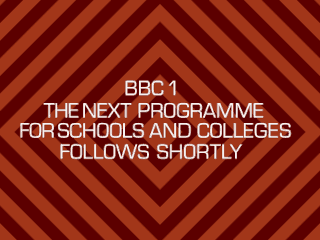
For longer gaps in the schedule, this diamond-themed holding slide would appear before the diamond sequence to explain the next programme was on the way. A second version of this caption had more colours and text that was properly centred against the background!
BBC 2 Schools Diamond NEW! Su 2-Aug-26
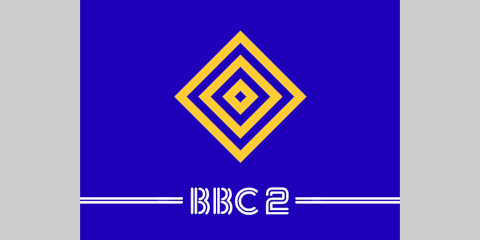
In the final week of broadcasts in the summer term of 1977, schools programmes in the afternoons were shifted to BBC 2 to make way for coverage of Wimbledon. A static caption was used for these.
Thanks to David Baldwin for sharing his capture of the original image.

BBC 1 Schools Dots
BBC 1 Schools Dots II
The 60-second countdown clock that replaced the diamond symbol, used before the BBC's schools programmes from September 1977. The first version had a rotating middle. Later, the middle would remain stationary.
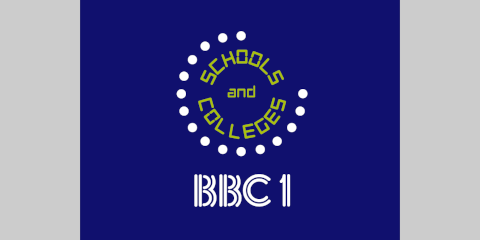
In September 1981, the BBC 1 clock, globe and schools countdown switched to using twin-stripe characters and a modified colour scheme.
BBC 1 Schools Dots - Electronically Generated
BBC 2 Schools Dots - Electronically Generated
NEW! Su 2-Aug-26
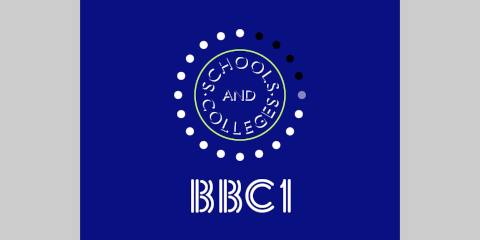
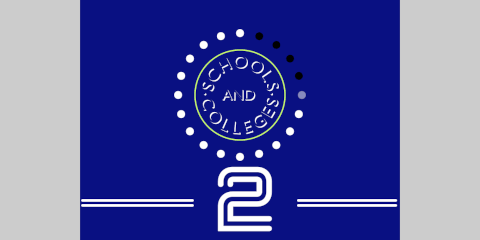
The final schools countdown was generated electronically by a system called EAGLE (Electronic Announcements, Graphics and Logo Equipment). The dots would now fade to black. When programmes needed to temporarily move to BBC 2, the animation would still be seen, but with the '2' symbol at the bottom. The dots appeared for the final time on Friday, June 24th, 1983.
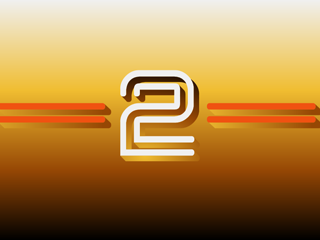
On Monday, September 19th, 1983, schools programmes were moved permanently to BBC 2 where they were billed under the heading Daytime on Two. Instead of a countdown, a daytime version of the BBC 2 ident appeared ten seconds before each programme. BBC 1 now closed down after Breakfast Time and started up again for Play School, which had also switched sides. It would be another three years before BBC 1 had a full daytime schedule.
The Open University
The Open University NEW! Su 2-Aug-26
In January 1971, BBC 2 began broadcasting programmes to accompany courses from The Open University. This symbol would be shown before each one. The horizontal line was finally removed in 1978.
The OU symbol was a mechanical model that produced an animated sequence at the start and end of each block of programmes. The animation was accompanied by the opening bars of Divertimento for Three Trumpets and Three Trombones composed by Leonard Salzedo.
You can remove the colour to reveal how a rotating disc and vertical blinds might have produced the animation.
BBC 2 OU
BBC 2 OU - Twin Stripes
As well as the animated symbol, viewers might see a clock (see below) and a caption reminding them which channel they were watching. This was especially important once BBC 1 also began broadcasting OU programmes.
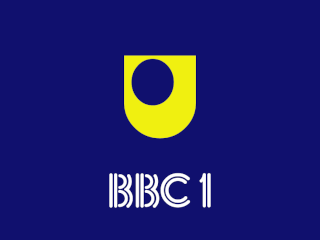
The OU on BBC 1 - Electronically Generated I
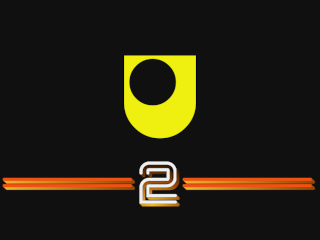
The OU on BBC 2 - Electronically Generated I
In the Eighties, the blue-on-yellow OU ident was replaced by idents that followed the style of the channel that was broadcasting the programmes. They were generated electronically by a system called MOUSE (Microprocessor Open University Symbol Equipment).
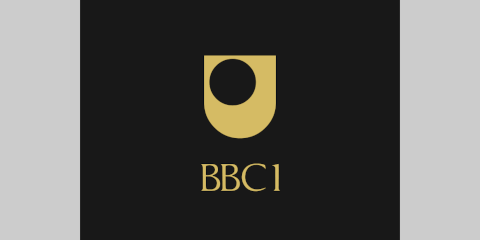
The OU on BBC 1 - Electronically Generated II
Updated Su 2-Aug-26
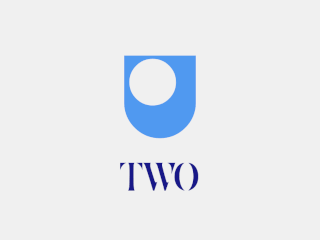
The OU on BBC 2 - Electronically Generated II
When BBC 1 and BBC 2 re-branded (in 1985 and 1986, respectively), the OU idents were updated to match.
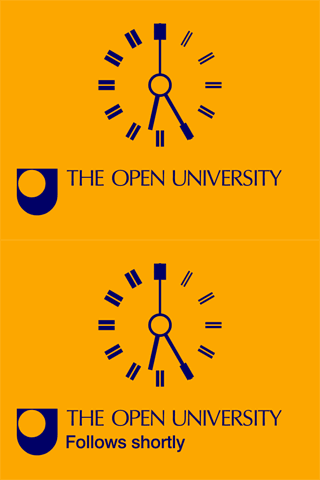
This was the clock that was used to fill time if there was a gap before the first OU programme. The clock and the animated symbol were mechanical models to begin with.
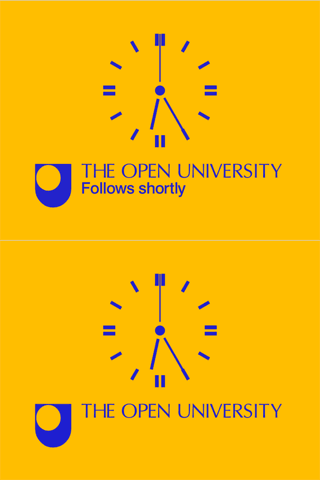
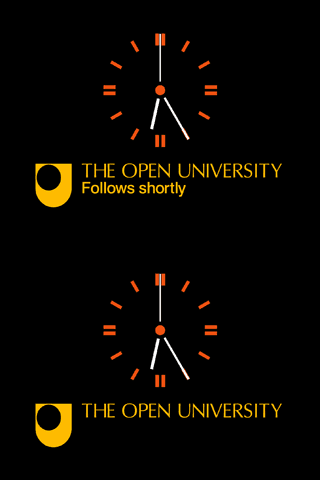
The OU Clock - Electronically Generated
The OU on BBC 2 Clock
This is the first electronically generated version of The Open University clock. This was then replaced by an OU clock for each channel. The BBC 2 version is shown here.
Test Cards

In the early 1970s, the BBC began using an electronically generated test card, known as Test Card G, based on a design by Philips. This is how it looked on BBC 2.
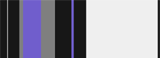
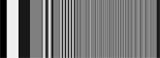
As well as the standard test cards with grey squares and/or coloured bars, there were a couple of other test cards used by the BBC. The first is a pulse and bar pattern, which included a burst of lilac. The two vertical lines on the right-hand side show that the card was transmitted from Cardiff. Different arrangements meant sixteen different regions could be identified in this way. The second pattern is called a multi-burst and features frequency gratings.
Other pages in the TV Logos section...
- Section Contents
- THAMES Logo Parade
- BBC Logo Gallery
- BBC 1 1985
- Station Idents from the Seventies
- Station Idents from the Eighties
- ITV 1999
- ITV 2002
- ITV 2003
- ITV 2004
- BBC Flash-free Files
- More Flash-free Files
- Flash Files
- More Flash Files
- LWT Flash Files
- Screensaver Flash Files
- Cult Programme Logos
- Worst Logo Competition
Other Related Web Sites
- It was in 1979 that the BBC's Richard Russell began working on the first fully electronic clock for television. You can read about his experiences working for the Corporation at the BBCeng.info website.
- Dave Jeffery has created a video showing what the BBC 2 clocks from 1967 would have looked like, as well as a video of his re-creations of many of the BBC 'polo mint' clocks. There is also a demo of how the OU ident may have worked.
- Dave Jeffery also blogged about re-creating the typeface used in the BBC 1 COW era with a link to his GitHub repo so you can download your own copy.
- Brendan Terrett has an online TV Clocks App website with re-creations of clocks from the BBC and from the Australian networks. You can add authentic video effects to show ghosting and poor reception, for example.
- You should also check out ZXGuesser's site of live TV clocks which you can tweak by clicking on the spanner icon. For example, here is his version of the BBC 1 Scotland COW clock.
- You can download a PDF version of the May 1978 edition of Television at americanradiohistory.com that has an article on the BBC's unusual test cards and captions, and includes a screenshot of the BBC Midlands Christmas clock.
- For more regional clocks, TVARK has a large selection of stills and video from the BBC nations and regions. They also have a section on The Open University.
- An article in the Rewind section of The TV Room discusses how the BBC 2 clock went electronic and the later clocks seen in the nations, including a link to video of the BBC 2 Wales clock. The same site also has footage of the BBC 1 Christmas clock from 1984.
- The Winter 1981/1982 edition of ENG INF describes the EAGLE and MOUSE systems (used for the electronic BBC Schools dots countdown and OU animation, respectively). You can download a PDF version from the BBCeng.info website.
- Jason Robertson's sub-TV site has a section devoted to BBC Schools.
- YouTube has Super 8 footage of the BBC Cymru Wales clock. Kaleidoscope's channel has video of a later version. And there's a look around the clock device on Vimeo.


